






How long until F1 becomes a closed-cockpit formula?
- This topic has 31 replies, 21 voices, and was last updated 11 years, 9 months ago by
Anonymous.
- AuthorPosts
- 4th July 2012, 16:16 at 4:16 pm #131640
 Magnificent GeoffreyParticipant
Surtees, Massa, Wheldon, de Villota. Four high profile incidents which all resulted in either serious injuries or loss of life due to severe blows to the head. Each occurring to drivers in open cockpit single-seaters.
While it is too late to do anything that would retroactively prevent those four accidents from being so tragic, the motorsport world CAN do something to help prevent similar incidents in future. Are cockpit canopies the solution to this? Le Mans endurance racing regulations now state that any new prototype must be a coupe – meaning the driver is stationed in a closed (covered) cockpit (Audi’s R18 and the Toyota TS030) as opposed to sitting in an open cockpit, single-seater style (Audi’s old R8 and the Pescarolo Judd). This is because of exactly this issue. *(EDIT: I’ve just checked up on Wiki and it seems I may actually be mistaken in this, sorry.) Why shouldn’t F1 go the same way?
The two main issues that come to my mind when I start thinking about this are:
1) Cockpit canopies signal the end of the traditional open cockpits that F1 cars have always had since 1950, when the World Championship first began.
2) While canopies protect the drivers inside from external hazards, they also provide an obstacle to the driver if they need to vacate the car quickly after an accident. The worst case scenario being a driver trapped in the car while upside down, with the ground preventing them from being able to escape the cockpit.While no. 1 has a great deal of nostalgic value to fans, it’s not a good enough reason to stop F1 going closed-cockpit if the FIA find a solution that they really do believe would decrease the chance of drivers receiving such severe blows to the head. I think no. 2 is the real issue here, as while we want to see something introduced to help prevent similar injuries, we also don’t want to create any new problems at the same time.
So, thoughts? Is it time that F1 became a closed-cockpit formula or are there any alternative solutions you can think of?
4th July 2012, 16:28 at 4:28 pm #205050robbiepblake
ParticipantPutting traditions aside, the only negative thing about canopies I can think of is your second point, creating an obstacle for the driver if he (or indeed she) needs to vacate quickly.
Visibility is another issue but I’m sure manufacturers can produce toughened material with very little glare or distortion.
Perhaps the only option is to keep evolving the helmet.
4th July 2012, 16:42 at 4:42 pm #205051S.J.M
ParticipantWell, LMP1 is banning the open cockpit for the drivers as of next year i believe, so its not like its just F1 thats looking into it or being talked about.
Im torn on the subject, I like open cockpits, its as much of what F1 is about as much as all the other parts. If they was to change it, I dont know if its a good or bad idea. Its best not however, to knee jerk in responce. Wheldons death was as much to do with the oval race track saftey standards and de Villota involved a truck which wouldnt be on a Racetrack, or even near a working car on any other circumstances.
4th July 2012, 16:54 at 4:54 pm #205052 robk23Participant
My main concern with closed cockpits is visibility. A roll cage style canopy would be easy to escape from but there would be obstructions to the drivers vision. I would prefer some sort of development of the fighter jet style canopy made of an extra strong material reinforced where it wouldn’t block the driver’s vision (over the top of their head)? For a quick escape, would a system where the canopy is opened as the steering wheel is removed save vital seconds?
4th July 2012, 16:56 at 4:56 pm #205053pluk
ParticipantThe driver being trapped in a closed cockpit could itself be quite a dangerous problem to have though. How many incidents across open cockpit series have passed pretty much without notice that could have been a lot worse with a driver trapped? Fairly small fire based incidents could end horribly. There is also the problem of delay and difficulty removing injured drivers who become trapped, it is something I sadly often see in real life and can lead to a lot of complications and difficulties administering essential first aid quickly enough and removing those with spinal injuries.
F1 and all motor sport is inherently dangerous and always will be. I think solving the problem of an ‘exposed’ head creates an equally serious problem of driver accessibility. May as well leave it as is.
4th July 2012, 16:58 at 4:58 pm #205054BasCB
ParticipantFor me this could be the route to take for a solution – a role-hoop cage. Looks pretty ugly, and it won’t solve everything, but it also protects and does not pose an obstacle for getting out of the car.
4th July 2012, 17:09 at 5:09 pm #205055th13teen
MemberIt would just look disgusting, and without that added danger, that is associated with F1, it does not seem to bode well, in my opinion! You can have safety, but there needs to be some risk! Although I understand the thought of it! I would say not for a good 3 seasons yet, because the new rules and regulations coming in 2013-14 will be a big enough leap, before we start thinking about cock pits!
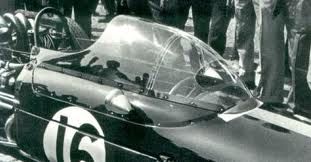
4th July 2012, 17:26 at 5:26 pm #205056Participant@robk23 That fighter jet cockpit has been tried & tested before in the 60s by Jack Brabham at Monza in ’68. It was mainly done to test top end speed with a cockpit like it, and was tested in the pratice session. However, Jack disliked it and complained that it distorted his vision when driving at speed.
 4th July 2012, 17:40 at 5:40 pm #205057
 the_sigmanParticipant
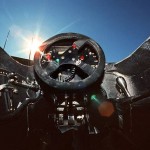
Another solutoin is this:
4th July 2012, 18:06 at 6:06 pm #205058Mads
Participant@th13teen
I really don’t think risks are an enjoyable part of F1.
Its a part of F1, because they are in cars that are going very quickly, but I really don’t think it adds anything. Its all fine when no one is hurt, but I remember the sickening feeling, when Massa met a spring in Hungary, all too well. It was by no means enjoyable.
And just think how it must have been for people close to him. It must have been incredibly painful.
If we can avoid that, then by all means go ahead!
I think the best solution is a sort of open top canopy like what is used on some dragsters.
The drivers need to get out quickly, but they certainly also need something that stops airborne wheels from smashing their heads straight into the airbox.4th July 2012, 18:36 at 6:36 pm #205059 davidhunter13Participant
It’s a difficult one. My thoughts are that the best solution would be a reinforced glass screen that reaches just above the drivers helmet wrapping around the cockpit but which is left open-topped for speedy exits. A roll cage just doesn’t seem to work for visibility and a fully enclosed structure could cause more problems than it solves. I think having drivers heads so exposed is a recipe for disaster and they need something to deflect incoming wheels and parts. Remember when Schumacher could so easily have been decapitated at Abu Dhabi, there’s been a few other very lucky escapes with cars flying right over in front of the cockpit, and no one wants to see a horrific crash like that on tv. We all like some wheel to wheel action but I’d prefer it if I knew the chances of injury to anyone were as minimal as they possibly could be.
4th July 2012, 19:08 at 7:08 pm #205060ParticipantI dont mean to come out callous or uncaring, and I accept that this might leave me open to attack. But regardless of the problem or its solution, 1 thing is as its always been and always will be. And that is, Motorsport is dangerous. Every ticket to every race has this printed on it, and every driver knows and accepts this. If we leave the chassis as open cockpits then theres a risk of facial injurys, if its a closed cockpit then the risk of being trapped in the car is a real possiblity. In short, there is no right/wrong option here.
Besides this doesnt just involve F1 but every junior open cockpit formula from Series Renault 3.5/GP2 to Formula ford and Go Karts. If there is issues in F1 car designs then surely it stands to reason that it needs to be addressed across the different Formulas.
4th July 2012, 19:16 at 7:16 pm #205061Magnificent GeoffreyParticipantBesides this doesnt just involve F1 but every junior open cockpit formula from Series Renault 3.5/GP2 to Formula ford and Go Karts. If there is issues in F1 car designs then surely it stands to reason that it needs to be addressed across the different Formulas.
If F1 does become a closed cockpit formula, I don’t see any reason why all the lower formulae couldn’t go the same way too. Karting is a bit different though.
4th July 2012, 19:24 at 7:24 pm #205062 BullfrogParticipant
I spotted a roll cage on this Pikes Peak single-seater in the Top 40 pictures from the 2012 Goodwood Festival – and it didn’t look as ugly as I expected.

How does the driver get in and out? Can they squeeze through or does the cage lift off? What if it’s damaged or the driver’s injured?
Cost is an issue, as (I agree) it should be on everything down to Formula Ford – there’s less power but the driving’s worse! – so that probably rules out jetfighter-style canopies.
The look of an F1 car could change anyway – will the new turbos in 2014 still have overhead air boxes? Maybe there’s an opportunity there to build something into the regulations.
4th July 2012, 21:03 at 9:03 pm #205063Anonymous
InactiveI think closed cockpits would cause as many problems as they would solve. Access would be the most important problem – how would the driver get out in an emergency, or how would he be safely extracted from the car if he was injured? If they do introduce closed cockpits, they’ll have to make absolutely sure they’ve thought of a safe solution to everything, because the last thing anyone would want to see would be a driver stuck upside down in his cockpit with his car on fire and the marshals struggling to get him out.
- AuthorPosts


- You must be logged in to reply to this topic.